
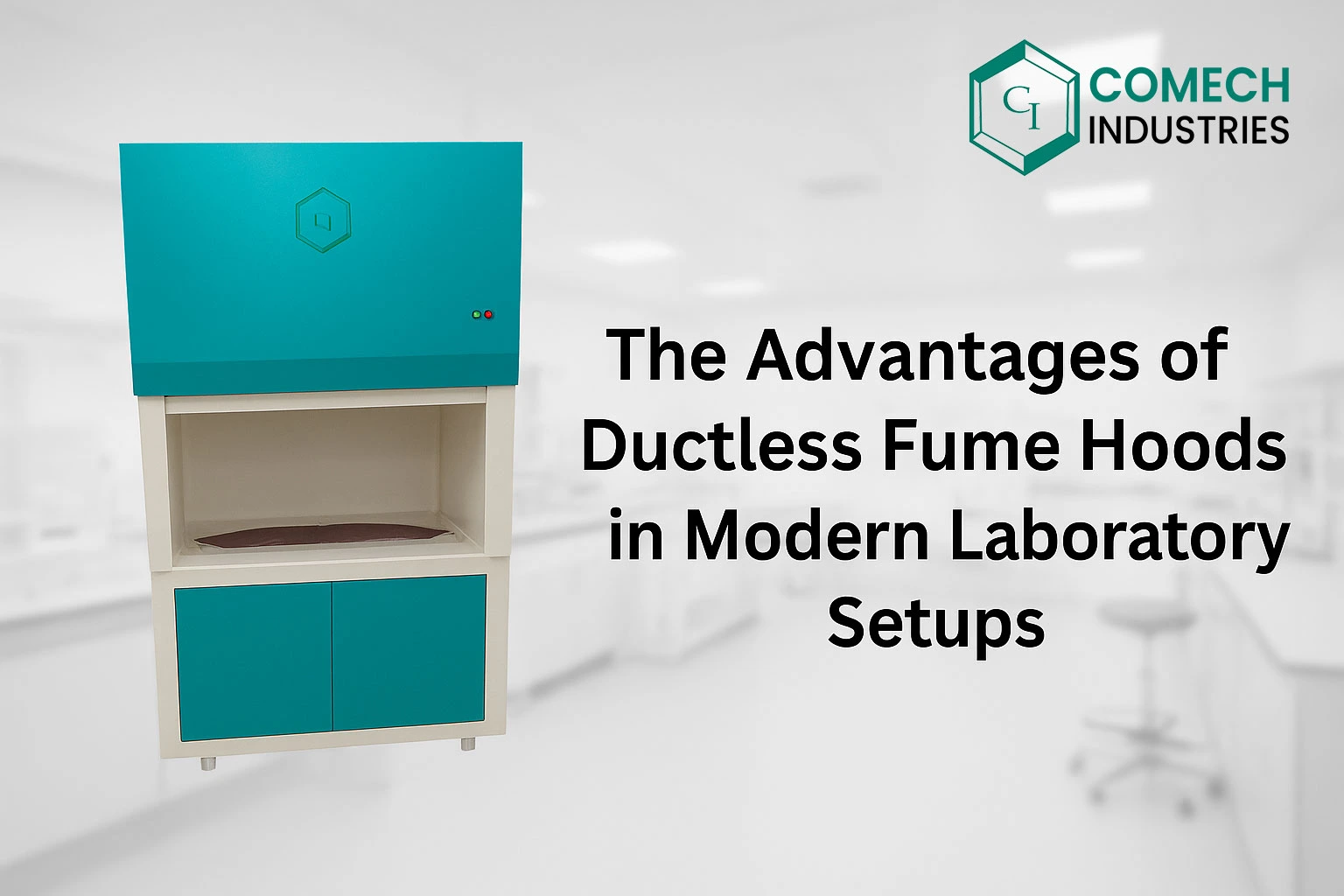
In today’s laboratories—whether in pharmaceuticals, biotechnology, research, or education—safety, flexibility, and efficiency are top priorities. One piece of equipment that aligns perfectly with these goals is the ductless fume hood. Unlike traditional ducted systems that rely on external ventilation, ductless fume hoods use advanced filtration to capture and neutralize harmful vapors, returning clean air to the lab. This innovation has transformed how labs manage hazardous substances while optimizing space and costs.
What Is a Ductless Fume Hood?
A ductless fume hood is a self-contained workstation designed to protect laboratory personnel from inhaling hazardous fumes, vapors, and particulates. Instead of venting air outside the building through ductwork, these units use multi-stage filtration—often including activated carbon filters and HEPA filters—to remove contaminants before recirculating purified air back into the workspace.
Key Advantages of Ductless Fume Hoods
Enhanced Flexibility in Lab Design
Ductless fume hoods are portable and modular, making them ideal for laboratories with limited space or evolving research needs. They can be placed wherever they are needed—without the constraints of fixed ductwork. This adaptability supports quick reconfiguration of lab layouts, which is essential in dynamic research environments.
Lower Installation and Operational Costs
Traditional ducted hoods require extensive ducting, fans, and connections to a building’s HVAC system—significantly increasing installation costs. In contrast, ductless fume hoods are plug-and-play units that only require an electrical connection. They also reduce energy costs since they do not exhaust conditioned air from the laboratory.
Eco-Friendly Operation
By recirculating filtered air instead of venting it outside, ductless hoods minimize the environmental impact and reduce the carbon footprint of lab operations. They also prevent the release of potentially harmful chemicals into the external environment.
Effective Contaminant Filtration
Modern ductless hoods are equipped with specialized filters tailored to the types of chemicals being handled. Activated carbon filters adsorb organic vapors, while HEPA filters capture particulates. In some models, filter combinations can be customized to target specific hazards, ensuring high levels of safety.
Simplified Compliance and Maintenance
Because ductless fume hoods operate independently of a building’s exhaust system, they often simplify compliance with local environmental regulations. Maintenance typically involves routine filter changes, which can be done without complex servicing, reducing downtime and operational disruptions.
Mobility for Temporary or Field Applications
These hoods can be relocated easily, making them an excellent choice for temporary labs, pilot projects, or mobile laboratory setups. For institutions running short-term research programs, this mobility translates into significant cost and time savings.
When to Choose a Ductless Fume Hood
While ductless fume hoods offer numerous advantages, they are best suited for applications involving low to moderate volumes of hazardous chemicals and where the contaminants can be effectively captured by available filter media. They are ideal for:
- Educational laboratories in schools and universities
- Research and development facilities
- Pharmaceutical quality control labs
- Forensic laboratories
- Cosmetic formulation labs
For high-volume or highly toxic chemical handling, a traditional ducted system may still be recommended.
Conclusion
The shift toward ductless fume hoods in modern laboratories reflects a growing emphasis on flexibility, cost efficiency, and environmental responsibility. These systems deliver robust protection for laboratory personnel while eliminating the limitations of traditional ducted setups. By offering mobility, lower operating costs, and high filtration efficiency, ductless fume hoods have become a smart choice for laboratories that value safety and adaptability.
Laboratories investing in advanced ductless fume hood technology are positioning themselves for safer operations, easier compliance, and greater workspace efficiency—making them better prepared for the demands of modern scientific work.