
Posted on 1 Comment

The Advantages of Ductless Fume Hoods in Modern Laboratory Setups

The-Advantages-of-Ductless-Fume-Hoods-in-Modern-Laboratory-Setups

In today’s laboratories—whether in pharmaceuticals, biotechnology, research, or education—safety, flexibility, and efficiency are top priorities. One piece of equipment that aligns perfectly with these goals is the ductless fume hood. Unlike traditional ducted systems that rely on external ventilation, ductless fume hoods use advanced filtration to capture and neutralize harmful vapors, returning clean air to the lab. This innovation has transformed how labs manage hazardous substances while optimizing space and costs.

What Is a Ductless Fume Hood?

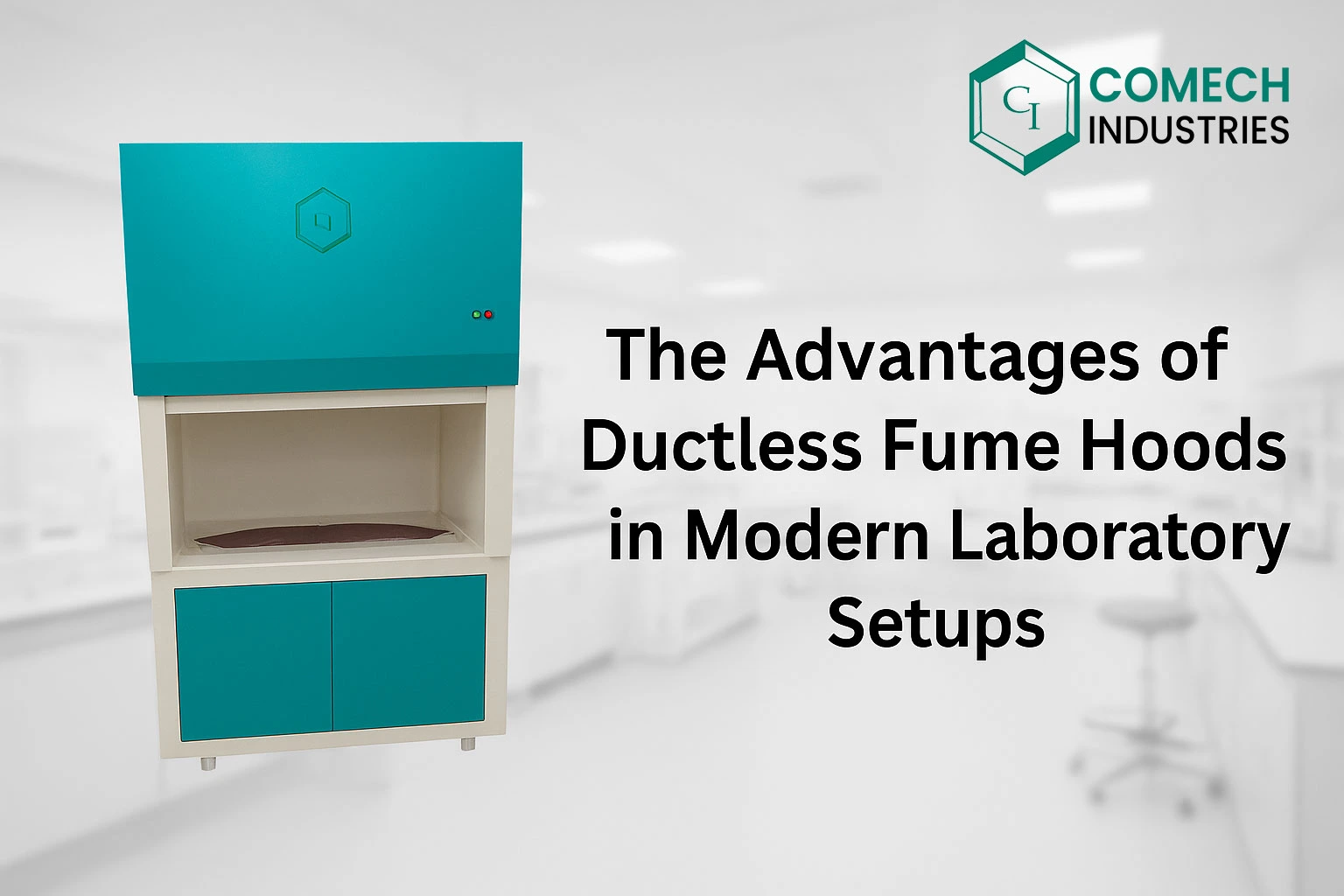
A ductless fume hood is a self-contained workstation designed to protect laboratory personnel from inhaling hazardous fumes, vapors, and particulates. Instead of venting air outside the building through ductwork, these units use multi-stage filtration—often including activated carbon filters and HEPA filters—to remove contaminants before recirculating purified air back into the workspace.

Key Advantages of Ductless Fume Hoods

Enhanced Flexibility in Lab Design

Ductless fume hoods are portable and modular, making them ideal for laboratories with limited space or evolving research needs. They can be placed wherever they are needed—without the constraints of fixed ductwork. This adaptability supports quick reconfiguration of lab layouts, which is essential in dynamic research environments.

Lower Installation and Operational Costs

Traditional ducted hoods require extensive ducting, fans, and connections to a building’s HVAC system—significantly increasing installation costs. In contrast, ductless fume hoods are plug-and-play units that only require an electrical connection. They also reduce energy costs since they do not exhaust conditioned air from the laboratory.

Eco-Friendly Operation

By recirculating filtered air instead of venting it outside, ductless hoods minimize the environmental impact and reduce the carbon footprint of lab operations. They also prevent the release of potentially harmful chemicals into the external environment.

Effective Contaminant Filtration

Modern ductless hoods are equipped with specialized filters tailored to the types of chemicals being handled. Activated carbon filters adsorb organic vapors, while HEPA filters capture particulates. In some models, filter combinations can be customized to target specific hazards, ensuring high levels of safety.

Simplified Compliance and Maintenance

Because ductless fume hoods operate independently of a building’s exhaust system, they often simplify compliance with local environmental regulations. Maintenance typically involves routine filter changes, which can be done without complex servicing, reducing downtime and operational disruptions.

Mobility for Temporary or Field Applications

These hoods can be relocated easily, making them an excellent choice for temporary labs, pilot projects, or mobile laboratory setups. For institutions running short-term research programs, this mobility translates into significant cost and time savings.

When to Choose a Ductless Fume Hood

While ductless fume hoods offer numerous advantages, they are best suited for applications involving low to moderate volumes of hazardous chemicals and where the contaminants can be effectively captured by available filter media. They are ideal for:

  • Educational laboratories in schools and universities
  • Research and development facilities
  • Pharmaceutical quality control labs
  • Forensic laboratories
  • Cosmetic formulation labs

For high-volume or highly toxic chemical handling, a traditional ducted system may still be recommended.

Conclusion

The shift toward ductless fume hoods in modern laboratories reflects a growing emphasis on flexibility, cost efficiency, and environmental responsibility. These systems deliver robust protection for laboratory personnel while eliminating the limitations of traditional ducted setups. By offering mobility, lower operating costs, and high filtration efficiency, ductless fume hoods have become a smart choice for laboratories that value safety and adaptability.

Laboratories investing in advanced ductless fume hood technology are positioning themselves for safer operations, easier compliance, and greater workspace efficiency—making them better prepared for the demands of modern scientific work.
Posted on 1 Comment

Safe and Smart: Key Features of OT Plenum Boxes and Vinyl Flooring for Hospitals

Key-Features-of-OT-Plenum-Boxes-and-Vinyl-Flooring-for-Hospitals

In modern healthcare environments, particularly in operating theatres (OTs), patient safety depends on maintaining an ultra-clean, controlled, and sterile atmosphere. Two often-overlooked yet critical components in achieving this are OT plenum boxes and vinyl flooring. While one ensures clean, directional airflow above the surgical zone, the other provides a hygienic, slip-resistant, and easy-to-maintain surface underfoot. Together, they play an essential role in infection control and operational efficiency.

OT Plenum Boxes – Ensuring Clean Air at the Source

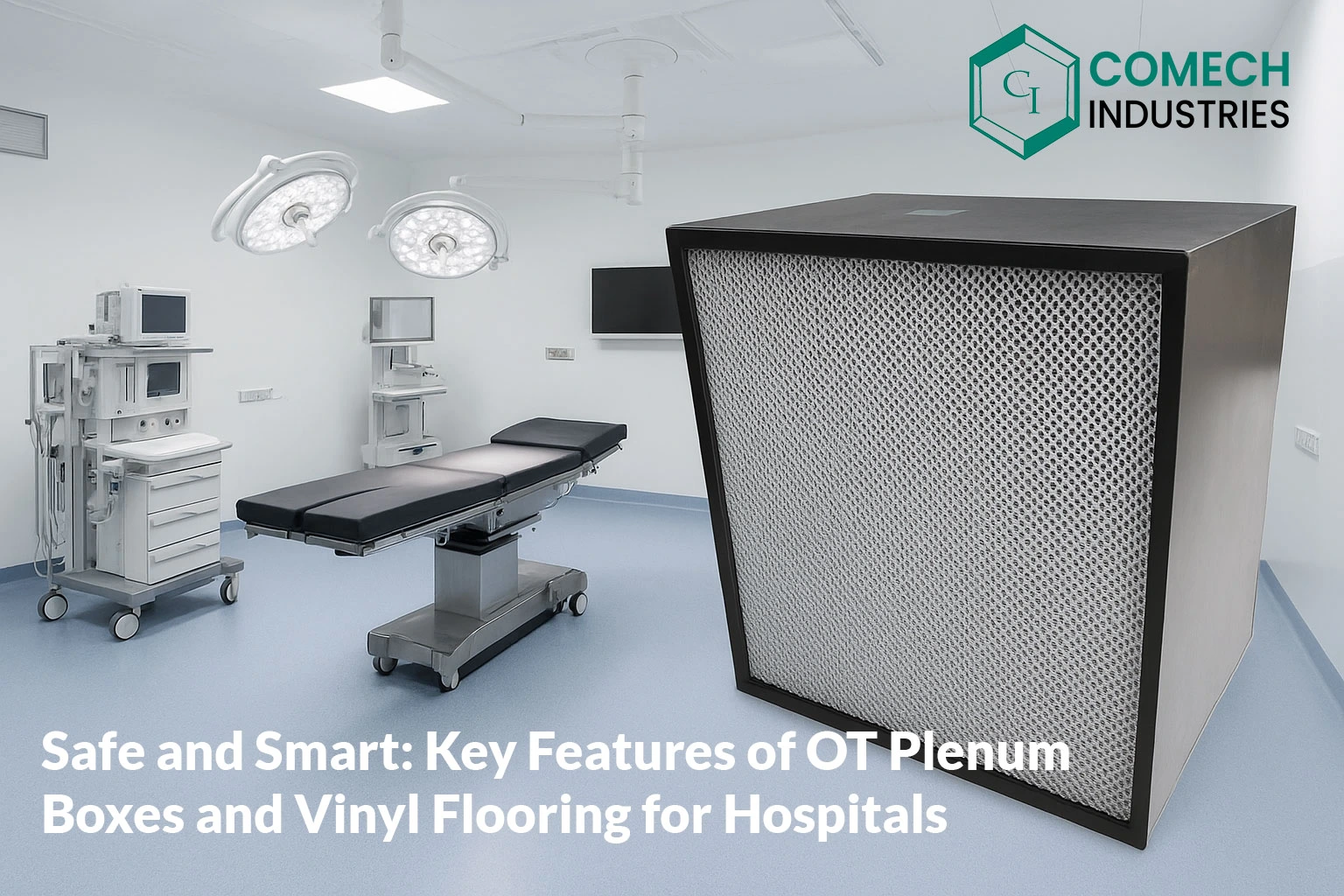
An OT plenum box is a specially designed air distribution unit that delivers clean, filtered air directly into the operating area. Installed in the ceiling above the surgical table, it works in conjunction with HEPA filters to provide laminar airflow—a continuous, uniform flow of air that minimizes turbulence and prevents airborne contaminants from entering the sterile field.

Key Features of High-Quality OT Plenum Boxes

  1. Integrated Filtration – Equipped with H13 or H14 grade HEPA filters, capable of removing up to 99.995% of particles as small as 0.3 microns.
  2. Even Air Distribution – Designed to maintain laminarity at a velocity of 0.45 m/s ± 20%, ensuring optimal particle control.
  3. Low Noise and Vibration – Engineered for quiet operation, enhancing surgeon concentration and patient comfort.
  4. Durable Construction – Typically manufactured from stainless steel (SS304 or SS316) for corrosion resistance and easy cleaning.
  5. Seamless Integration – Can be customized to fit the OT ceiling layout, with provisions for lighting and other equipment.

Why It Matters:
Without a properly functioning plenum box, even the most advanced OT can face contamination risks. Laminar airflow directly above the surgical zone drastically reduces the chance of surgical site infections (SSIs) by ensuring that airborne contaminants are pushed away from the critical area.

Vinyl Flooring – Hygienic and Practical for Healthcare

Flooring in a hospital OT is more than just a surface to walk on—it’s a vital part of the infection control barrier. Vinyl flooring has become the preferred choice for hospitals because of its seamless finish, durability, and resistance to microbial growth.

Key Features of Hospital-Grade Vinyl Flooring

  1. Seamless Installation – Welded joints eliminate cracks and gaps where bacteria and dust can accumulate.
  2. Antimicrobial Properties – Some variants are treated with antimicrobial coatings to inhibit the growth of pathogens.
  3. Slip Resistance – Maintains grip under wet or dry conditions, reducing the risk of accidents.
  4. Chemical Resistance – Withstands cleaning agents, disinfectants, and chemical spills without degrading.
  5. Ease of Maintenance – Simple cleaning procedures help maintain hygiene without downtime.
  6. Aesthetic Variety – Available in a range of colors and patterns to suit hospital design themes and zoning.

Why It Matters:
Hospital flooring must handle heavy foot traffic, wheeled medical equipment, and frequent cleaning. Vinyl offers long-term performance while contributing to a safe and sterile environment.

The Combined Impact in OT Environments

When OT plenum boxes and vinyl flooring work together, the result is a surgical space that is both safe and efficient. The plenum box protects the sterile field from airborne contamination, while vinyl flooring prevents microbial build-up and supports stringent cleaning protocols. Together, they contribute to:

  • Reduced risk of surgical site infections
  • Compliance with ISO 14644 and NABH standards
  • Improved comfort for surgical staff
  • Lower long-term maintenance costs

Conclusion

Infection prevention in hospitals is a multi-layered process, and the right infrastructure plays a pivotal role. OT plenum boxes ensure that every breath of air in the surgical zone is clean and controlled, while vinyl flooring keeps the environment hygienic from the ground up. Hospitals that invest in these features are not only safeguarding patient health but also enhancing operational reliability.

Posted on 1 Comment

Why COMECH INDUSTRIES Is the Go-To Choice for Clean Room Equipment in India

Why-COMECH-INDUSTRIES-Is-the-Go-To-Choice-for-Clean-Room-Equipment-in-India-(1)

In highly regulated industries such as pharmaceuticals, biotechnology, healthcare, and electronics, maintaining a contamination-free environment is not just a requirement—it’s a necessity. The success of these sectors depends heavily on reliable cleanroom equipment that meets stringent industry standards. In India, COMECH INDUSTRIES has emerged as a trusted partner for organizations that demand precision, performance, and compliance.

Commitment to Quality and Standards

COMECH INDUSTRIES operates with a clear focus on delivering products that conform to global cleanroom and air filtration standards, including ISO 14644, EU GMP Annex 1, and cGMP guidelines. Their manufacturing facility in Ahmedabad, Gujarat, is equipped to produce high-quality cleanroom solutions, each tested for performance and durability before dispatch. The company’s ISO 9001:2015 certification reinforces its commitment to consistent quality management practices.

Comprehensive Product Portfolio

One of the major reasons COMECH INDUSTRIES is the preferred choice in the cleanroom sector is its extensive range of products designed for various classified environments. The portfolio includes:

  • Fan Filter Units (FFUs) – Energy-efficient designs with H13 or H14 HEPA filters to maintain stable laminar airflow and consistent particle control.
  • Laminar Air Flow Cabinets – Horizontal and vertical configurations suitable for Grade A or ISO 5 environments.
  • Pass Boxes – Both static and dynamic models with interlocking doors, ensuring safe material transfer between classified zones.
  • Air Showers – High-velocity filtered air jets to remove particulates from personnel before entering sensitive areas.
  • Positive Pressure Modules – Maintaining overpressure to protect clean zones from cross-contamination.
  • Biosafety Cabinets and Sampling Booths – Protecting operators, products, and the environment during critical handling processes.

Each product is engineered for reliability, ease of maintenance, and adaptability to specific project requirements.

Customization for Specialized Needs

No two cleanroom projects are identical. Different applications demand unique airflow patterns, pressure differentials, filter grades, and cabinet dimensions. COMECH INDUSTRIES specializes in delivering tailored solutions—whether it’s adjusting airflow velocity in an FFU, modifying pass box sizes, or integrating stainless steel grades like SS304 or SS316 for enhanced corrosion resistance. This customization ensures that customers get equipment that fits seamlessly into their facility layouts and operational workflows.

Focus on Filtration Excellence

Filtration is at the core of cleanroom performance. COMECH INDUSTRIES offers a complete range of HEPA and ULPA filters, from deep pleated H14 units to mini-pleated designs, capable of capturing up to 99.999% of particles at 0.3 microns. With stringent integrity testing and careful selection of filter media, the company ensures that every filtration unit delivers maximum efficiency while maintaining low pressure drop for energy savings.

End-to-End Service Support

Purchasing cleanroom equipment is only the first step—installation, validation, and ongoing maintenance are equally important. COMECH INDUSTRIES provides a full range of after-sales services, including installation support, filter replacement, equipment validation, and annual maintenance contracts. This end-to-end service approach allows clients to maintain compliance and extend the life of their equipment.

Competitive Edge in the Indian Market

While there are multiple cleanroom equipment manufacturers in India, COMECH INDUSTRIES stands out due to:

  • Quality Assurance – Every unit is tested before delivery to ensure performance consistency.
  • Cost-Effectiveness – Competitive pricing without compromising on materials or construction quality.
  • Lead Time Management – Efficient production schedules to meet project deadlines.
  • Industry Expertise – Deep understanding of cleanroom dynamics and contamination control challenges.

Building Trust Across Industries

Over the years, COMECH INDUSTRIES has supplied equipment to some of the most demanding sectors, where even minor contamination risks can result in production losses or regulatory non-compliance. By combining technical expertise, product reliability, and customer-focused service, the company has built a reputation for excellence in India’s cleanroom industry.

Conclusion

For organizations seeking dependable, high-performance cleanroom solutions, COMECH INDUSTRIES has proven itself as the go-to choice in India. With a balance of technical precision, customization capabilities, and dedicated service, the company continues to set benchmarks in cleanroom equipment manufacturing—ensuring that clients can operate in environments where quality and safety are non-negotiable.